Moran Defense builds integrated surveillance and rapid-response networks for Kenya's most critical frontiers — the Somali border, the North Rift, and the contested maritime zone. Locally produced. Locally sustained.
Kenya's security challenges are not episodic. They are structural — driven by porous borders, vast ungoverned terrain, and adversaries who exploit the gap between detection and response.
Al-Shabaab continues to exploit the 680km frontier, launching IED and hit-and-run attacks across an area too vast for static patrols to cover.
Banditry and cattle rustling remain a deadly cycle. Thousands of livestock stolen each quarter, with abductions and killings destabilising entire counties.
A contested 92,000 km² EEZ with Somalia — rich in offshore resources, vulnerable to illegal fishing, trafficking, and piracy.
A layered, integrated defense network. Persistent surveillance, AI-driven analysis, and coordinated response — built as one system, not four products.
A medium-altitude, long-endurance unmanned aircraft system optimised for the heat, dust, and altitude of the NFD and North Rift. Persistent eyes over terrain that ground patrols cannot reach.
An AI-powered intelligent monitoring network that fuses UAS feeds, ground sensors, and authorized intelligence into a shared real-time operating picture, helping operators detect patterns and prioritize alerts.
A resilient ground protection layer combining seismic, acoustic, and infrared sensors along priority routes. Ngao detects suspicious activity and shares verified alerts with Mlinzi for coordinated awareness.
A secure communications layer that pushes detection data directly to the nearest KDF or police rapid-response unit — compressing the kill chain from hours to minutes.
KIPsat describes processing Copernicus Sentinel-2 imagery into geospatial information for practical, on-the-ground decisions. Subject to technical validation and an agreement, that kind of Earth observation data could add a wider-area context layer to Moran's security picture.
Satellite-derived maps and land-surface indicators could help teams understand changing conditions across remote or hard-to-access areas, complementing—not replacing—field reporting and persistent UAS coverage.
Where supported by the imagery and analysis, periodic change information could help analysts identify areas that merit closer attention. Satellite imagery is not a real-time alert or a substitute for tactical surveillance.
If data can be securely shared in a compatible format, Moran Mlinzi could present geospatial products alongside authorized sensor and UAS information for analyst review and operational planning.
Analysts could use validated satellite-derived context to inform where further verification is appropriate, then coordinate approved responses through Moran's existing command and field workflows.
This is a proposed integration concept, not a confirmed partnership or deployed capability. Feasibility depends on KIPsat's available products and interfaces, data licensing, security requirements, update frequency, and joint validation. KIPsat's public overview: kipsat.co.ke ↗
Built on combat-proven architecture and adapted for Kenyan operating conditions. Locally assembled, locally sustained, and designed to be expendable at a cost that makes attrition survivable.
| Role | Persistent ISR / Light Strike |
| Endurance | 27 hours max |
| Service Ceiling | 18,000 ft |
| Control Range | 200 km line-of-sight |
| Payload | 150 kg — EO/IR / SAR / Comms Relay |
| Munitions | 4 × precision-guided, 12 kg class |
| Launch | Short runway / catapult |
| Sustainment | Local MRO · KOFC / Moran Hub |
Three distinct environments, one integrated system. Each theatre drives different requirements — and each is covered.
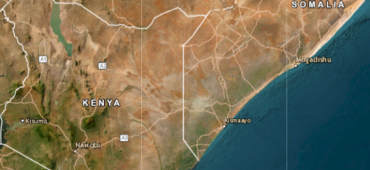
Persistent UAS orbits over known crossing points, integrated with ground sensors and rapid-response handoff to forward operating bases.
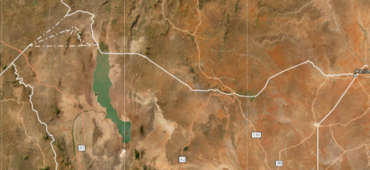
Anti-rustling surveillance along cattle corridors, with acoustic gunshot detection and rapid interdiction support for county security teams.
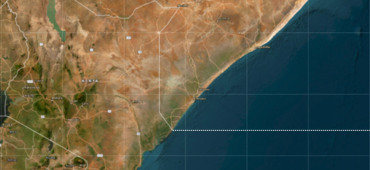
Coastal radar, maritime patrol UAS, and KSL-built patrol vessels integrated into a single maritime domain awareness picture.
Moran Defense does not import a capability and call it sovereign. We integrate with Kenya's existing defence industrial institutions to build, train, and sustain on Kenyan soil.
Munitions and payload sustainment, expanding local production capacity.
Maritime platform construction and refit for coastal patrol integration.
Operator and analyst pipeline. Military and civilian certification.
Mobile command vehicles and ground fleet built on existing lines.
Moran Defense is available for operational briefings with the Kenya Defence Forces, National Police Service, Ministry of Defence, and qualified partners.